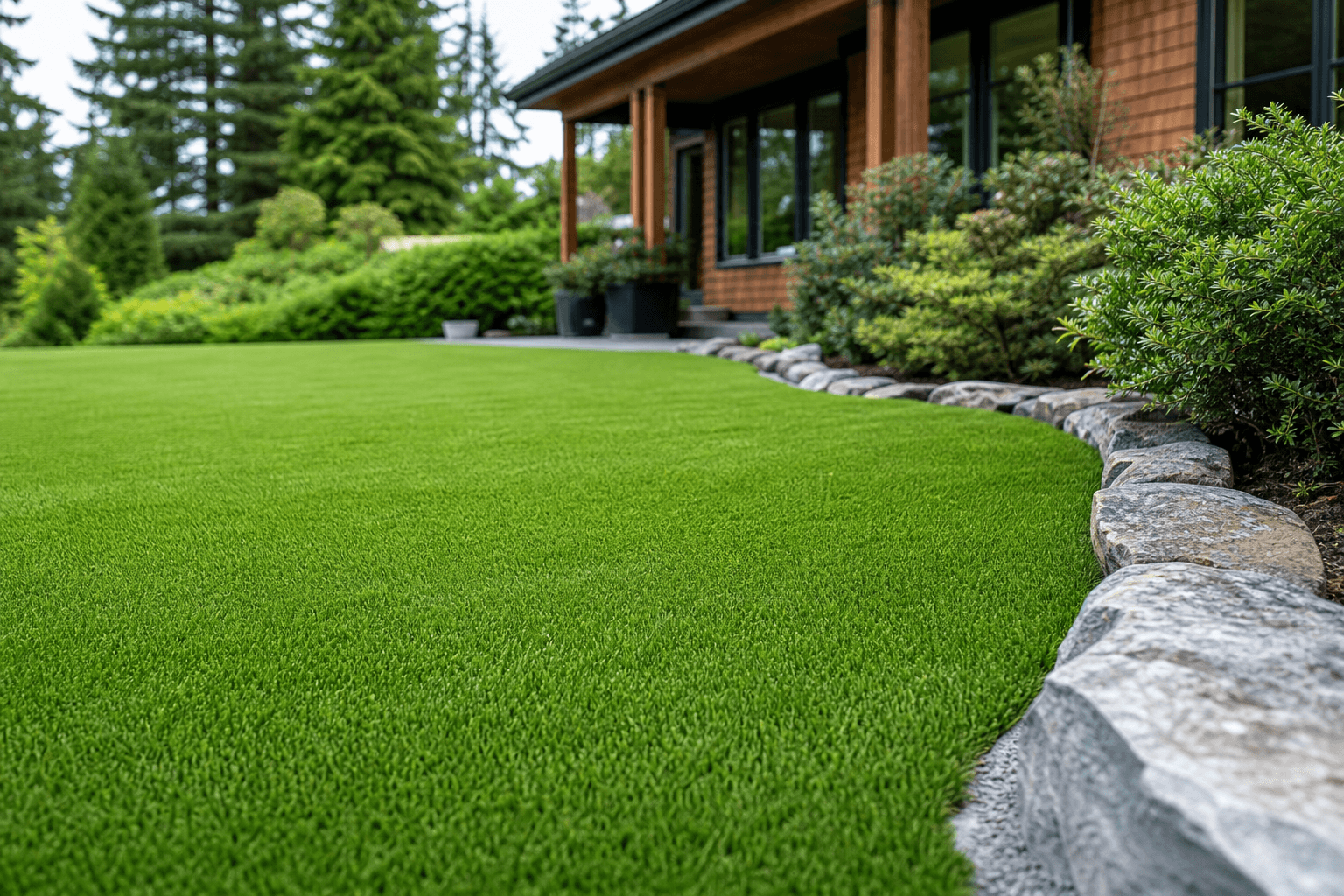
Delta wasn't built for lawns. It was built by a river.
The City of Delta sits on the Fraser River delta. For thousands of years the river dumped fine silt and clay across this land. That's great for farming. It's terrible for a backyard lawn. Fine particles pack tight and leave almost no air space, so water has nowhere to go. After a November storm, a Ladner or Tsawwassen yard can stay soggy for days. Not hours. Days.
That's the part most generic turf advice misses. Delta isn't just "a bit wet." The native soil here is some of the slowest-draining ground in Metro Vancouver. You can lime it, aerate it, and reseed it every spring. The clay is still there in October.
What that looks like in Ladner
Ladner's older streets around Elliott, Chisholm, and the blocks behind Ladner Village have mature trees, cottonwoods, and big deciduous canopies. Those trees throw shade and send roots through the lawn. Pair that with silty soil that never really dries, and you get the classic Ladner winter yard: spongy underfoot, moss along the fence line, and a brown patch that never quite fills in.
Homeowners near Ladner Harbour Park and the dyke trails tell us the same story. The yard looks decent in June. By February it's mud. Kids and dogs stay inside. Then April comes and the reseeding starts again.
Tsawwassen's problem is newer, but it's the same soil
Tsawwassen looks different on the surface. A lot of the homes around Tsawwassen Springs, the Tsawwassen First Nation lands, and the streets off 56th Street and 12th Avenue are recent builds. The lawns look fine at possession. Then the first full winter hits.
Those lots sit on former farmland. The fill was graded and compacted for construction, then topped with a thin layer of imported soil and a roll of sod. Once that topsoil packs down, the clay takes over. Water sits. The sod thins. By year two or three, a lot of Tsawwassen homeowners are on their third reseeding and wondering why nothing sticks.
There's a second issue unique to this end of Delta. Properties near Boundary Bay, Beach Grove, and Centennial Beach take salt air and more direct sun than a sheltered Surrey lot. Salt stresses real grass blades. Synthetic turf doesn't absorb it, so waterfront yards actually hold up better in fake grass than they ever did in real grass.
North Delta and the Burns Bog water table
North Delta climbs out of the flood plain, but the clay never really leaves. Sunshine Hills, Annieville, and the Scott Road corridor still sit on heavy soil. Add the shade from Sunshine Hills' mature firs and maples, and real grass thins out even when the lot isn't as flat as Ladner.
Burns Bog sits on the edge of the municipality and affects the regional water table. Homes near the bog perimeter and in lower North Delta spots deal with seasonally high groundwater. That's another reason a lawn can stay wet even when the rain has stopped. We wrote more about this on our artificial turf installation in Delta page, including how we grade the base so water moves away from the house instead of sitting in the yard.
Why reseeding never wins here
Every spring, Delta homeowners spend money on moss killer, lime, seed, and sod. It helps for a few months. Then the rain comes back and the same soil does the same thing. The fix people try treats the symptom. The cause is the ground itself.
You can't cheaply change Fraser River silt. You can stop asking a living plant to grow in it. That's the whole case for synthetic grass in Delta.
How a proper artificial turf install drains a Delta yard
A cheap roll of turf laid on top of wet clay will fail. The water still has nowhere to go, seams lift, and the lawn smells. The install has to bypass the soil, not sit on it.
Here's what Surrey Turf Co builds on a Delta job:
- Excavate the organic layer. We strip the old sod and the wet topsoil so we're not leaving a sponge under the new lawn.
- Compact a crushed-rock base. Angular aggregate, packed in lifts, creates the drainage the native silt never will. Water moves through the rock and away from the surface.
- Grade for fall. Delta lots are often flat. Flat plus clay equals a pond. We put enough fall in the base so water has a direction to go.
- Use a fully permeable backing. Rain, hose rinses, and pet urine need to pass through the turf, not sit on it. That's especially important for dog yards in Ladner and Tsawwassen.
- Test it before we leave. We soak a section and watch it clear. If a spot holds water, we fix it on the day, not after you've lived with it for a winter.
Done right, the surface is usable minutes after a storm. That's the difference people notice first. Not the colour. The fact they can walk across the yard in January without sinking.
Pets, kids, and the Delta mud cycle
Delta is a family town. Dogs are everywhere, from the dyke trails to Boundary Bay Regional Park. A wet clay yard plus paws is a mud factory. Urine burns real grass. Paths wear to dirt. Then the rain turns that dirt into a track through the house.
Purpose-built pet turf uses a drainage backing and an antimicrobial infill so urine goes through and odour doesn't sit. Solids pick up like they would on any lawn. A hose rinse keeps it fresh. Dogs can't dig through a pinned, edged install. If your Tsawwassen or Ladner backyard has already been worn to dirt, this is usually the cleanest reset.
What it costs, and when it pays off
Most Delta installs land between $12 and $22 per square foot, all in. A typical Tsawwassen backyard of 300 to 500 square feet is often $4,500 to $11,000. Larger Ladner lots with deeper excavation or more slope work run higher. The biggest variable is the base, because that's the part Delta yards actually need.
The payback isn't just the water bill. It's the years of moss killer, seed, sod, and weekends you stop spending on a lawn that never wins. A quality residential artificial grass installation lasts 15 to 20 years. In a climate this wet, that math shows up faster than it does on a sunny, well-drained lot.
Is every Delta yard a turf yard?
No. If you've got a sunny Ladner lot that already drains and you like mowing, keep the real grass. Turf is the right call when the soil stays wet, the trees have won the shade fight, the dogs have worn a mud pit, or you're tired of starting over every April.
That's most of the calls we get from Delta. Not people chasing a trend. People who have already tried the cheap fixes.
Want us to look at your yard?
Surrey Turf Co does free on-site quotes in Ladner, Tsawwassen, and North Delta. We'll measure the space, check how the water is sitting, and tell you straight whether artificial turf makes sense, or whether you're better off sticking with real grass. If you want the neighbourhood-by-neighbourhood version, start with our Delta service area page or the nearby North Delta page.